
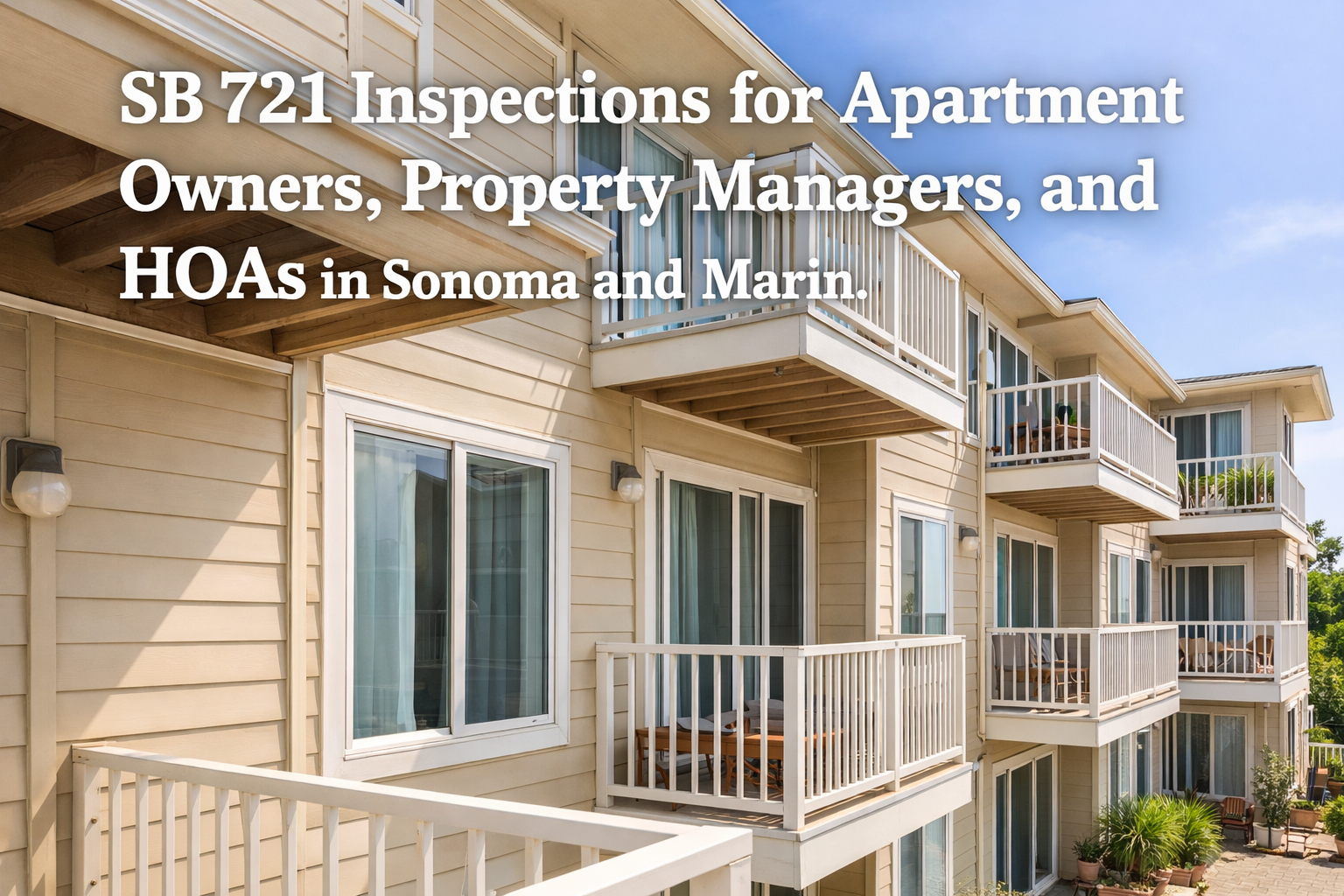
SB 721 Inspections for Apartment Owners, Property Managers, and HOAs in Sonoma and Marin
For apartment owners, property managers, and HOAs in Sonoma County and Marin County, SB 721 is more than just another compliance requirement. It is a practical issue tied directly to safety, liability, maintenance planning, and the long-term condition of your property.
If your building includes balconies, decks, stairways, or walkways supported in whole or in part by wood framing, California law may require an inspection of those exterior elevated elements. For multifamily properties throughout the North Bay, understanding how SB 721 applies—and addressing it proactively—can help prevent larger problems later.
What SB 721 Means for Multifamily Property Owners
SB 721 applies to many multifamily residential buildings with three or more units. The law requires inspection of certain exterior elevated elements (EEE), which may include:
- Balconies
- Decks
- Stairways
- Walkways
- Landings
- Other elevated structures extending from the building and relying on wood framing or associated waterproofing systems
These elements are exposed to weather over time, which makes them vulnerable to moisture intrusion, wood rot, corrosion, and structural deterioration.
For apartment owners and HOAs, the issue is straightforward: these components are often heavily used, frequently overlooked, and expensive to repair once problems are advanced.
Why Property Managers and HOAs Should Take SB 721 Seriously
For a property manager or HOA board, there are few things worse than discovering a major balcony or walkway problem after it has already created a safety concern, disrupted occupancy, or forced emergency repairs.
SB 721 inspections matter because they help identify issues before they become larger and more costly.
For Sonoma County and Marin County properties, these inspections can help with:
- Reducing liability exposure
- Improving tenant and occupant safety
- Planning maintenance and repairs more effectively
- Documenting building conditions
- Supporting compliance with California requirements
This is especially important in multifamily properties where exterior elevated elements are part of daily use and often serve multiple units at once.
Common Properties That May Need SB 721 Inspections
In the North Bay, a wide range of properties may need an SB 721 inspection, including:
- Apartment complexes
- Multifamily residential buildings
- Condo developments
- HOA-managed communities
- Buildings with shared elevated walkways and stairs
Whether the property is located in Santa Rosa, Petaluma, Windsor, Healdsburg, San Rafael, Novato, Mill Valley, or Sausalito, the core concern is the same: if the building includes qualifying exterior elevated elements, those areas should be evaluated carefully.
What Exterior Elevated Elements Are Inspectors Looking At?
The legal term exterior elevated elements (EEE) can sound technical, but in practice it refers to elevated exterior structures that people use regularly and that may be vulnerable to hidden deterioration.
These often include:
- Balconies attached to apartment units
- Exterior decks serving multifamily residences
- Shared stair systems
- Elevated walkways connecting units
- Landings and transitions exposed to weather
In many cases, the most serious damage is not obvious at a glance. Surface appearance alone may not reveal the true condition of the structure underneath.
Why Sonoma and Marin Properties Need a Careful Inspection Approach
Properties in Sonoma County and Marin County face environmental conditions that can accelerate deterioration of balconies, decks, and other exterior elevated elements.
Common contributing factors include:
- Seasonal rain
- Moist coastal air
- Sun exposure and temperature swings
- Aging waterproofing systems
- Deferred maintenance over time
For apartment owners and property managers, this means deterioration can develop slowly and quietly until a problem becomes difficult—or expensive—to ignore.
That is one reason SB 721 compliance inspections should be approached as more than a formality. A careful inspection provides real value when it helps you understand the actual condition of the property.
What the Inspection and Reporting Process Typically Looks Like
For property managers and HOAs, one of the biggest questions is what the process actually involves.
In general, an SB 721 inspection includes:
- Identifying qualifying exterior elevated elements on the property
- Evaluating visible conditions at decks, balconies, stairways, and walkways
- Looking for signs of moisture intrusion, structural wear, and deterioration
- Assessing waterproofing-related concerns where applicable
- Documenting observed deficiencies and recommendations
After the inspection, a report is typically provided outlining the findings and helping ownership or management determine next steps.
For larger properties, having a clear and organized report is especially important because it helps boards, owners, and managers prioritize repairs and communicate with contractors or other stakeholders.
Common Issues Found in Apartment and HOA Properties
In multifamily and HOA-managed properties, several conditions show up repeatedly during balcony and deck inspections.
These may include:
- Wood rot caused by long-term moisture exposure
- Deteriorated waterproof coatings
- Improper drainage or flashing details
- Structural movement or visible distress
- Deferred maintenance from years of weather exposure
- Repairs that were made cosmetically but did not address the underlying issue
These are exactly the kinds of problems that can create larger repair scopes if left unaddressed.
For Property Managers, Timing and Planning Matter
For property managers, SB 721 compliance is not just about the inspection itself. It is also about planning.
A proactive inspection can help you:
- Budget for repairs before they become urgent
- Schedule access and maintenance more efficiently
- Reduce surprises during property transactions
- Show ownership or board members that conditions are being monitored responsibly
For apartment owners and HOAs, that kind of planning is often the difference between a manageable repair project and a disruptive, expensive problem.
Not All Inspections Deliver the Same Value
In an unlicensed environment, property owners and managers already know that not all inspectors approach these jobs with the same level of care, thoroughness, or reporting quality.
That matters.
If you are dealing with apartment buildings, multifamily properties, or HOA-managed communities, you need an inspector who understands:
- How exterior elevated elements are actually used in real-world properties
- What signs of hidden deterioration to watch for
- How to document findings clearly
- How to provide reporting that is useful, not vague
The goal should not be just getting through the process. The goal should be getting clear information you can actually use.
SB 721 Inspections in Sonoma County and Marin County
For owners, managers, and HOAs throughout Sonoma County and Marin County, SB 721 inspections are an important part of protecting both people and property.
Buy Wise Inspections provides SB 721 inspections for apartment buildings, multifamily properties, and HOA communities throughout the North Bay, including Santa Rosa, Petaluma, Rohnert Park, Windsor, Healdsburg, Sebastopol, San Rafael, Novato, Mill Valley, Sausalito, and surrounding communities.
If your property includes balconies, decks, stairways, or walkways that may fall under SB 721, a professional inspection can help you move forward with more clarity and confidence.
Service Areas
Buy Wise Inspections serves clients throughout Sonoma County and Marin County, including Santa Rosa, Petaluma, Rohnert Park, Windsor, Healdsburg, Sebastopol, San Rafael, Novato, Mill Valley, Sausalito, and nearby North Bay communities.
Book Online Now
Click here to schedule your inspection